Modern courtrooms are usually reserved for human defendants, corporate disputes, and complex legal battles. You expect to see judges, juries, and lawyers debating the finer points of the law. You certainly do not expect to see a farm animal sitting on the witness stand. Yet, if you travel back a few centuries, the boundaries of legal responsibility looked completely different.
In 1386, the French town of Falaise hosted one of history’s most baffling criminal proceedings. A pig was arrested, thrown into a prison cell, and forced to stand trial for murder. The medieval authorities did not view this as a joke or a metaphorical display. They treated the animal as a conscious being with moral agency, fully capable of understanding right from wrong.
After a formal trial, the court found the pig guilty and sentenced it to a brutal public execution. While this sounds like a dark fairy tale, it was a documented legal reality. Examining this extraordinary case offers a fascinating glimpse into how medieval European societies understood justice, morality, and the relationship between humans and the natural world.
The Tragic Events in Falaise
The story begins with a terrible tragedy. In the winter of 1386, a young child was left unattended in the town of Falaise, located in the Normandy region of France. A wandering sow approached the child and attacked. The animal fatally mutilated a child, resulting in severe injuries to the victim’s face and arms. Tragically, the child died from these wounds shortly after the attack.
In the modern era, an animal that attacks a human is usually put down quickly for public safety. There is no trial, no legal defense, and no formal sentencing. The local authorities in medieval France handled the situation much differently. They put animals on trial using the exact same legal frameworks applied to human citizens.
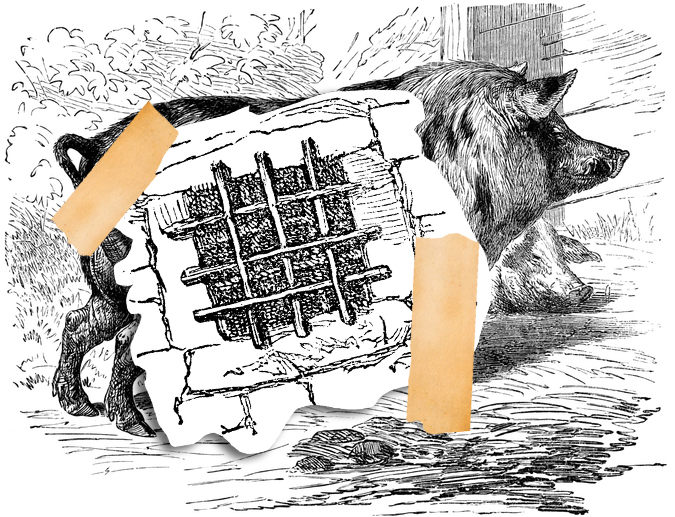
The offending pig was quickly apprehended by local law enforcement. Instead of facing immediate destruction, the animal was arrested and placed in the local jail. It sat in a holding cell alongside human thieves, debtors, and violent criminals, awaiting its day in court.
A Trial by Human Standards
The legal proceedings that followed were meticulously organized. The pig was brought before a tribunal, facing formal charges of murder. Records indicate that the authorities spared no expense in ensuring the trial followed proper legal protocols. The animal was treated like a criminal, meaning it was read its charges and given a formal hearing.
Because the pig could not speak to defend itself, the court proceedings relied on witness testimonies. Townspeople who had seen the attack or its aftermath were called to the stand to provide their accounts of the event. The judge listened carefully to the evidence presented by the prosecution.
This level of bureaucratic dedication reveals a lot about the medieval mindset. People at the time believed that all of God’s creatures were subject to divine and earthly laws. If a human committed murder, they faced the executioner. Therefore, if an animal committed murder, it had to answer to the exact same system of justice.
The Gruesome Verdict and Execution
Unsurprisingly, the Falaise pig was found guilty of murder. The judge sentenced the animal to death, ruling that it should suffer the same injuries it had inflicted upon the young child before being executed.
The town of Falaise treated the execution as a major public event. The pig was dressed in human clothing—specifically, a waistcoat, breeches, and a pair of gloves. This bizarre wardrobe choice was intended to blur the lines between human and animal, emphasizing that the pig was being punished as a member of society who had broken the social contract.
The local executioner mutilated the pig in the town square, mirroring the injuries suffered by the child. Finally, the animal was publicly hanged from a wooden gallows. The local authorities even commissioned a large fresco in the town’s church to memorialize the execution, ensuring the community would remember the event for generations.
The Broader Context of Medieval Animal Trials
The Falaise pig is certainly famous, but it was not an isolated incident. Throughout the Middle Ages and into the early modern period, European courts routinely tried animals for various crimes. Records show that domestic animals were formally tried and executed for killing humans, often by hanging or burning at the stake.
Pigs were the most common defendants in these capital cases. They roamed freely through medieval villages and often scavenged for food in the streets. Their close proximity to humans, combined with their large size and omnivorous diet, made them particularly dangerous to small children.
However, courts did not limit their prosecutions to livestock. The legal system also targeted pests like rats, locusts, and weevils. These smaller animals were typically tried in ecclesiastical (church) courts rather than secular ones. When a swarm of insects destroyed a crop, the church would appoint a lawyer to defend the pests. If found guilty, the judge would issue a formal excommunication, ordering the insects to leave the region immediately.
Frequently Asked Questions
Why did medieval courts spend money trying animals?
Historians suggest that trying animals served a deep psychological purpose. When a child was killed or a crop was destroyed, the community felt a profound loss of control. Treating the animal as a rational criminal and subjecting it to the legal process helped restore a sense of order and justice to a chaotic world.
Were animals ever provided with legal representation?
Yes. In many cases, especially those held in church courts, animals were arrested, imprisoned, tried in court, and assigned defense attorneys. These lawyers took their jobs seriously. They would argue that the animals were simply following their God-given nature or that the summons to court was invalid because the animals could not read the documents.
Did any animals win their cases?
Occasionally, animals were acquitted or received reduced sentences. In one famous case, a female pig and her piglets were charged with the murder of a child. The mother was found guilty and executed, but the piglets were acquitted because the court determined they were too young to understand the severity of their mother’s actions.
Rethinking the Line Between Man and Beast
The 1386 trial of the Falaise pig forces us to reconsider how human societies interact with the natural world. To modern eyes, dressing a pig in human clothing and hanging it from a gallows feels absurd. Yet, to the people of medieval France, it was a logical and necessary application of the law.
If you want to learn more about the strange legal customs of the past, check out local historical archives or read deeper into the available records on medieval jurisprudence. Understanding these bizarre historical moments helps us appreciate how far our own legal systems have evolved over the centuries.
Verified References
Scholarly / Academic Context
- Medieval animal trials overview (Medievalists.net)
- Confirms that in medieval France, animals (especially pigs) were formally tried and executed for killing humans, often by hanging.
2. Specific 1386 Case (Falaise, France)
- Did you know? France used to put animals on trial (Connexion France)
- Describes the 1386 Falaise pig case, where a pig attacked a child who later died from injuries.
- When Societies Put Animals on Trial (JSTOR Daily)
- Notes that in 1386, a pig in Falaise was executed after being treated like a criminal and publicly punished.
3. Details of the Trial and Execution
- Homicidal Hogs: Murderous Pigs on Trial (Leiden Medievalists Blog)
- Records that the pig fatally mutilated a child and was executed as punishment.
- Strange Medieval Courts: Animals on Trial (Medieval Torture Museum)
- Describes how the pig was tried, found guilty, and publicly hanged, illustrating how seriously such trials were taken.
- The Medieval Animal Trials (Historic Side Notes)
- Explains that animals could be arrested, imprisoned, tried in court, and sentenced like humans.