
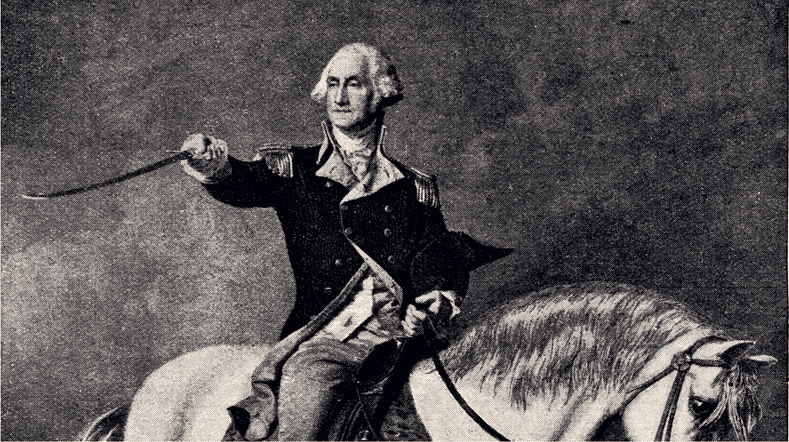
A quiet forest in western Pennsylvania became the unlikely birthplace of a global conflict in the spring of 1754. A 22-year-old lieutenant colonel from Virginia named George Washington led a small militia into the disputed Ohio River Valley. He had orders to assert British claims against encroaching French forces. A sudden skirmish broke out, leaving a French ensign dead and setting off a chain reaction that would reshape the map of North America.
This localized frontier clash quickly escalated into the French and Indian War, serving as the North American theater of the massive Seven Years’ War between Great Britain and France. While the British ultimately secured a monumental victory, the triumph came at a staggering cost. The financial and political fallout from the conflict fundamentally altered the relationship between the British Crown and its American colonies.
Understanding the events that unfolded between 1754 and 1763 is essential for anyone studying American history. This post explores how a territorial dispute in the Ohio Valley launched George Washington’s military career, bankrupted the British government, and laid the direct groundwork for the American Revolution.
The Spark in the Ohio Valley
By the mid-18th century, the British colonies along the Atlantic coast were rapidly expanding. Settlers looked westward toward the fertile lands of the Ohio River Valley. However, the French also claimed this vast region, viewing it as a crucial link between their territories in Canada and Louisiana. The competing ambitions of two global empires made a collision inevitable.
Washington’s Mission and Jumonville Glen
In late 1753, Virginia’s lieutenant governor sent a young George Washington to Fort LeBoeuf to demand the French abandon their newly constructed outposts. The French politely refused. The following year, Washington returned with a small force of Virginia militiamen to build a British fort at the forks of the Ohio River.
Before reaching their destination, Washington’s men encountered a French scouting party at a site now known as Jumonville Glen. On May 28, 1754, the Virginians and their Native American allies ambushed the French camp. The skirmish resulted in the death of the French commander, Ensign Joseph Coulon de Jumonville. According to the American Battlefield Trust, this brief and violent encounter marked the official outbreak of the French and Indian War.
Following the ambush, Washington retreated and hastily constructed Fort Necessity. A much larger force of French soldiers and Native American allies soon surrounded the crude wooden palisade. On July 3, 1754, Washington was forced to surrender. He unknowingly signed a capitulation document written in French that admitted to the “assassination” of Jumonville. The British government responded by sending regular troops across the Atlantic, turning a regional dispute into a massive war.
A Frontier Conflict Goes Global
The early years of the conflict proved disastrous for the British and their colonial militias. The French relied on strong alliances with various Native American tribes, utilizing guerrilla warfare tactics that devastated traditional British military formations.
The Disaster at the Monongahela
In 1755, British Major General Edward Braddock led a massive expedition to capture the French Fort Duquesne in present-day Pittsburgh. Washington accompanied Braddock as an aide-de-camp. Marching in tight, European-style columns through the dense Pennsylvania woods, the British army walked directly into an ambush.
French and Native American fighters fired from behind trees and rocks, decimating the British ranks. General Braddock was mortally wounded, and his army scattered. Washington famously rode across the battlefield, having multiple horses shot out from under him, to help organize the chaotic retreat. This crushing defeat left the American frontier entirely exposed to raids and forced the British to rethink their military strategy.
The British Turn the Tide
The momentum finally shifted in 1757 when British Secretary of State William Pitt assumed control of the war effort. Pitt recognized that winning the conflict in North America would ensure British dominance globally. He poured massive resources into the colonies, reimbursing colonial governments for their military efforts and dispatching tens of thousands of regular British troops.
The British Royal Navy heavily blockaded French ports, preventing reinforcements and critical supplies from reaching Canada. A string of major military victories followed. British forces captured the Fortress of Louisbourg in 1758 and successfully besieged Quebec in 1759. By September 1760, the French surrendered Montreal, effectively ending the war in North America.
The Aftermath: Debt, Taxes, and Tension
The Treaty of Paris in 1763 officially concluded the conflict. France ceded almost all of its territory in North America, handing over Canada and all land east of the Mississippi River to Great Britain. The British Empire achieved total victory, but the seeds of its own unraveling were already planted.
A Staggering Financial Burden
Wars are incredibly expensive. The nine-year conflict pushed the British government to the brink of financial ruin. Between 1756 and 1763, the British national debt nearly doubled, surging from £75 million to over £133 million. The interest payments alone consumed an enormous portion of the empire’s annual budget.
British officials believed the American colonists should help shoulder this massive financial burden. After all, the war was fought primarily to defend the colonial borders. Parliament began passing a series of acts designed to generate revenue directly from the colonies. According to the Office of the Historian, this sudden attempt to impose direct taxation sparked intense colonial resentment. Measures like the Stamp Act and the Townshend Acts infuriated a population that had grown accustomed to governing and taxing themselves.
The Proclamation Line of 1763
Financial disputes were only part of the problem. Following the war, Native American tribes in the Great Lakes region launched Pontiac’s Rebellion to resist British postwar policies and colonial expansion. Desperate to prevent another costly frontier war, King George III issued the Proclamation of 1763.
This royal decree strictly forbade colonists from settling west of the Appalachian Mountains. American colonists, many of whom had fought and bled to secure the Ohio Valley, felt betrayed. They viewed the Proclamation as an oppressive overreach by a distant monarch who did not understand their needs or rights.
Forging a Future Leader
The French and Indian War also profoundly shaped the men who would eventually lead the colonies to independence. George Washington emerged from the conflict entirely transformed. He began the war as an eager but inexperienced militia officer and ended it as the most recognized colonial military leader in America.
As noted by George Washington’s Mount Vernon, Washington’s wartime experiences provided him with an invaluable education in logistics, leadership, and military strategy. He learned firsthand the difficulties of supplying an army in the wilderness. He also witnessed the vulnerabilities of traditional European military tactics when applied to the rugged American landscape.
Furthermore, Washington experienced deep frustration with the British military hierarchy. British regular officers routinely treated colonial militia officers with open disdain. Washington repeatedly sought a royal commission in the regular British Army, but his requests were firmly denied. This dismissive treatment fostered a growing sense of ideological division. Washington, like many other colonial veterans, realized that the British Empire viewed its American subjects as distinctly inferior.
The Path to Independence
The French and Indian War permanently altered the colonial mindset. For generations, the American colonies relied heavily on the British military for protection against the looming threat of New France. Once the British expelled the French from North America, that reliance vanished.
The colonists no longer needed British troops to protect their borders. Instead, the continued presence of British soldiers during peacetime felt like an occupying force designed to enforce unpopular taxes and restrict westward expansion. The shared experience of the war also fostered a new sense of unity among the diverse colonies. Men from Massachusetts, Virginia, and Pennsylvania had fought side by side, recognizing their common interests and shared grievances against the Crown.
If you want to deepen your understanding of this critical era, explore the primary sources and detailed accounts provided by the historical sites linked throughout this post. Visiting historic locations like Fort Necessity or Mount Vernon can offer incredible insights into the harsh realities of frontier warfare and the early life of America’s founding generation.
Verified References
Encyclopaedia Britannica
Britannica – French and Indian War
Key support:
- Describes Washington’s 1754 attack on a French scouting party.
- Explains how the incident escalated into the broader war.
Relevant summary:
Washington’s forces engaged French troops at Jumonville Glen in 1754, provoking wider conflict between Britain and France.
U.S. Department of State – Office of the Historian
Office of the Historian – French and Indian War/Seven Years’ War
Key support:
- Explains that the French and Indian War led to British debt, taxation, and colonial resentment.
- Explicitly links the war’s aftermath to the American Revolution.
Relevant summary:
The war produced “colonial discontent, and ultimately the American Revolution.”
George Washington’s Mount Vernon
Mount Vernon – French and Indian War
Key support:
- Details Washington’s early military role in the Ohio Valley.
- Connects the war and its aftermath to the Revolution.
Relevant summary:
The conflict “ultimately contributed to the outbreak of the American Revolution.”
American Battlefield Trust
American Battlefield Trust – Causes and Outbreak of the French and Indian War
Key support:
- Explains how the fighting in North America expanded into the global Seven Years’ War.
- Provides context for Washington’s role in the opening stages.
SparkNotes Historical Summary
SparkNotes – The French and Indian War (1754–1763)
Key support:
- States directly that “George Washington’s forces initiate the French and Indian War.”
- Explains how postwar British policies helped divide Britain and the colonies.