
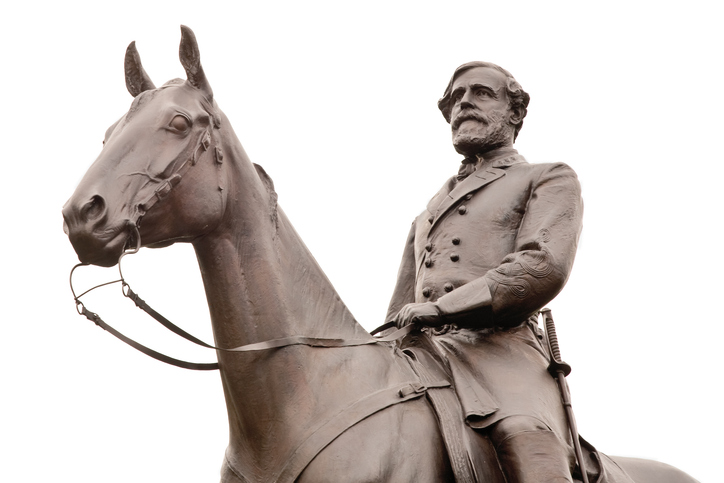
The spring of 1861 marked the fracturing of a young nation. Following the bombardment of Fort Sumter and President Abraham Lincoln’s call for troops to suppress the rebellion, the state of Virginia formally voted to secede from the Union. This monumental decision forced military officers from the state to make a deeply personal choice regarding their loyalties.
Among them was Robert E. Lee, a highly respected officer in the United States Army. Faced with the prospect of drawing his sword against his home state, Lee resigned his federal commission. He chose instead to offer his services to Virginia. This choice set the stage for one of the most significant military appointments of the American Civil War.
On April 23, 1861, Robert E. Lee was officially named the commander of Virginia’s military and naval forces. Understanding the timeline and context of this appointment helps clarify the early organizational stages of the Confederate military effort.
The Resignation and the Appointment
Robert E. Lee submitted his resignation from the United States Army on April 20, 1861. His decision was swift, coming only days after Virginia passed its ordinance of secession. The leaders of Virginia recognized the urgent need for experienced military leadership to organize the state’s defenses.
According to the U.S. National Park Service, three days after his resignation, Lee accepted the position of commander of Confederate forces in the state of Virginia. This rapid transition highlights the chaotic and urgent atmosphere of the early days of the Civil War. State officials knew they needed a unifying figure to rally and structure their newly formed military units.
Issuing General Orders, No. 1
The formal assumption of command occurred with official military documentation. The official Confederate documents, indexed by the Ohio Civil War Central, list “General Orders, No. 1 (Virginia Forces), April 23, 1861.”
Through this order, Lee announced to the troops and the public that he was assuming command of Virginia’s military forces. This document served as the foundational administrative step in transitioning the local militias and volunteer companies into a cohesive fighting force. It established Lee’s authority and initiated the massive logistical effort required to arm, feed, and train thousands of recruits.
Organizing the Provisional Army of Virginia
When Lee took command, he was not immediately leading the centralized “Confederate Army” as it would later be known. Instead, he was leading state forces. The legislature had authorized the creation of the Provisional Army of Virginia.
As noted in historical overviews of the Provisional Army of Virginia, the state’s forces were officially organized around the same time, with Lee serving as the commander of the military and naval forces of Virginia. His primary task was defensive. He needed to secure the state’s borders, protect vital infrastructure like railroads and armories, and prepare for an anticipated federal invasion.
The Challenge of Rapid Mobilization
Taking command of a newly formed provisional army presented immense logistical hurdles. Lee had to evaluate the existing state militia, which was largely untrained and poorly equipped. He immediately began assigning competent officers to key geographic regions, fortifying rivers, and establishing training camps. His engineering background proved vital during these early weeks, as he oversaw the construction of defensive works around critical areas like Richmond and the coastal waterways.
A Crucial Step Toward the Army of Northern Virginia
While Lee’s initial role was strictly related to Virginia’s state forces, it paved the way for his eventual leadership of the broader Confederate military. The Grateful American Foundation’s historical summary explicitly states: “April 23, 1861 — Robert E. Lee was named commander of Virginia Confederate forces.”
Eventually, as the Confederate government relocated to Richmond and central military organization took shape, Virginia’s state forces were absorbed into the national Confederate army. Lee would briefly serve as a military advisor to Confederate President Jefferson Davis before taking field command of the Army of Northern Virginia in 1862. However, his work during late April and May of 1861 was instrumental in ensuring that Virginia had a structured defense during the vulnerable early months of the conflict.
The Legacy of April 23
The events of late April 1861 demonstrate how rapidly the political crisis evolved into a full-scale military mobilization. Robert E. Lee’s appointment on April 23 provided Virginia with a seasoned leader at a critical moment of uncertainty. By organizing the Provisional Army of Virginia and issuing his first general orders, Lee established the military framework that would support the Confederate war effort in the Eastern Theater for the next four years.
Understanding this specific date helps historians and students alike track the precise mechanics of how states mobilized their populations for the American Civil War.
Verified References
U.S. National Park Service (highly authoritative)
- Lee biography (NPS Civil War)
- Evidence:
- States that “three days later, Lee accepted the position of commander of Confederate forces in the state of Virginia.”
- This aligns with the April 23, 1861 timeframe following Virginia’s secession.
Official/Primary Document Index (Ohio Civil War Central)
- Official Confederate Documents indexed by date
- Evidence:
- Lists “General Orders, No. 1 (Virginia Forces), April 23, 1861”, where Lee announced he was assuming command of Virginia’s forces.
Virginia Provisional Army (encyclopedic overview with legislative context)
- Provisional Army of Virginia (Wikipedia)
- Evidence:
- Confirms the creation of Virginia’s forces on April 23, 1861 and Lee’s appointment as “commander of the military and naval forces of Virginia.”
Historical summary source (secondary, but consistent)
- Grateful American Foundation – April 23 entry
- Evidence:
- Explicitly states: “April 23, 1861 — Robert E. Lee was named commander of Virginia Confederate forces.”