
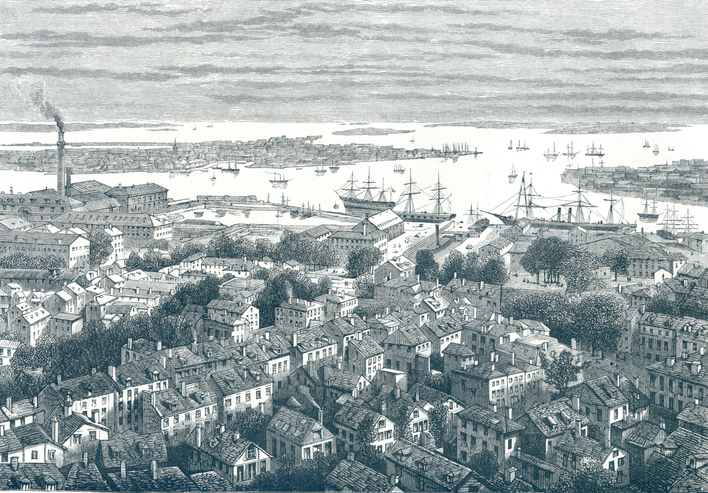
Sure, we’ve all heard of the Boston Tea Party. But fewer people know about a far more deadly, and bizarre, historical event: the Boston Molasses Disaster. On January 15, 1919, a massive storage tank in Boston’s North End burst, releasing over 2.3 million gallons of crude molasses into the bustling city streets.
The resulting wave—estimated to be up to 15 to 40 feet high and moving at an astonishing 35 miles per hour—swept through the neighborhood with terrifying force. It destroyed buildings, drowned horses, and ultimately claimed 21 human lives while injuring about 150 others.
How did a giant tank of baking syrup become a lethal weapon? The story involves corporate negligence, bizarre fluid dynamics, and a community forever changed by a sticky tragedy. Let’s look at what caused this unusual disaster and how it unfolded on that fateful winter afternoon.
A towering tank of trouble
The Purity Distilling Company, a subsidiary of the United States Industrial Alcohol (USIA) Company, operated the massive tank on Commercial Street. Towering 58 feet high and spanning 90 feet in diameter, the structure was built hastily in 1915. At the time, fermented molasses was a highly profitable commodity. It was used to produce industrial alcohol for munitions during World War I, and later, grain alcohol as Prohibition loomed.
Workers frequently noticed alarming signs. The massive steel container groaned and leaked sticky brown fluid from its seams. Local residents even brought cups to collect the dripping syrup for their homes. Despite these warnings, the company ignored the structural flaws. Researchers later discovered that the walls were too thin to hold millions of gallons of heavy liquid and were constructed from low-manganese steel prone to fracturing.
The deadly brown wave strikes
Around 12:30 p.m. on that unseasonably warm January afternoon, workers were taking their lunch breaks. Without warning, the rivets holding the bottom of the tank exploded like bullets. The massive steel walls tore open, unleashing a deafening roar and an unstoppable torrent of thick sludge.
As the hot molasses flooded the streets of Boston, it formed a tidal wave that wiped out everything in its path. Freight cars were swept away, and the support beams for an elevated train line were completely pushed over. A nearby firehouse was crushed by a piece of the ruptured tank, burying three firemen in the ruins.
Eyewitness accounts and the chaos
The sheer force of the 35-mph wave caught pedestrians entirely off guard. Eyewitnesses described a 30-foot wall of goo that tossed heavy wagons and horses around as if they were toys. The molasses was so powerful it tore buildings from their foundations.
Some survivors recalled hearing a low rumble that sounded like an approaching elevated train. Then the sky went dark as the mountain of brown syrup eclipsed the sun. Victims were caught in the suffocating tide, unable to outrun the sudden deluge.
A grueling rescue operation
Help arrived quickly, including police, Red Cross workers, and sailors from a nearby docked training ship. However, the unique physics of molasses turned the rescue mission into a nightmare. The day had started out relatively warm, at 46 degrees Fahrenheit, which helped the tank rupture. But as evening approached, the temperature began to drop toward freezing.
According to a detailed overview of the Great Molasses Flood, the winter chill caused the syrup to harden rapidly. As the molasses cooled, its viscosity increased dramatically, turning it from a fast-flowing liquid into a thick, inescapable tar. Rescuers found themselves mired fast in the goo, unable to reach the trapped victims. Many of the 21 people who perished suffocated because they simply could not be freed from the hardening paste. Dozens of horses met a similar tragic fate, dying like flies stuck to flypaper.
Cleaning up and seeking justice
It took weeks of grueling labor to clean the sticky sludge from the cobblestone streets, buildings, and train tracks. Workers used salt water and sand to cut through the hardened molasses, eventually washing the remnants into the harbor, which remained stained brown for months. For decades afterward, locals claimed they could still smell the sweet scent of molasses on hot summer days.
The tragedy sparked one of the most epic legal battles in Massachusetts history. Over 100 lawsuits were filed against the USIA Company. The corporation initially blamed the explosion on sabotage, claiming anarchists had planted a bomb. However, after a rigorous six-year investigation involving thousands of witnesses, an auditor found the company strictly liable due to poor structural integrity. The victims and their families were awarded nearly $1 million in settlements, and the disaster prompted stricter construction and safety codes across the United States.
Remembering Boston’s strangest tragedy
The Great Molasses Flood remains one of the most peculiar and devastating industrial accidents in American history. It serves as a grim reminder of what happens when corporate profit is prioritized over public safety. While the physical scars on Boston’s North End have long since healed, the memory of that terrifying brown wave endures.
If you find yourself walking down Commercial Street on a warm July afternoon, take a deep breath. You might just catch a faint, sweet whiff of history.
Verified References
- Boston shocked by deadly molasses flood (HISTORY.com)
- Confirms:
- Tank held 2.5 million gallons of molasses
- Explosion sent a wave through the streets
- 21 killed, many injured
- Adds context about the tank rupture and initial wave.
- Confirms:
- The Great Molasses Flood of 1919 (History article)
- Confirms:
- Tank burst released ~2.3 million gallons
- Molasses swept through Boston streets causing destruction
- Provides industrial and historical background.
- Confirms:
- Snopes Fact Check: Great Molasses Flood
- Confirms:
- Wave described as a “wall” of molasses
- 21 deaths, ~150 injuries
- Reports of buildings smashed and horses tossed
- Useful for verifying commonly repeated claims.
- Confirms: