
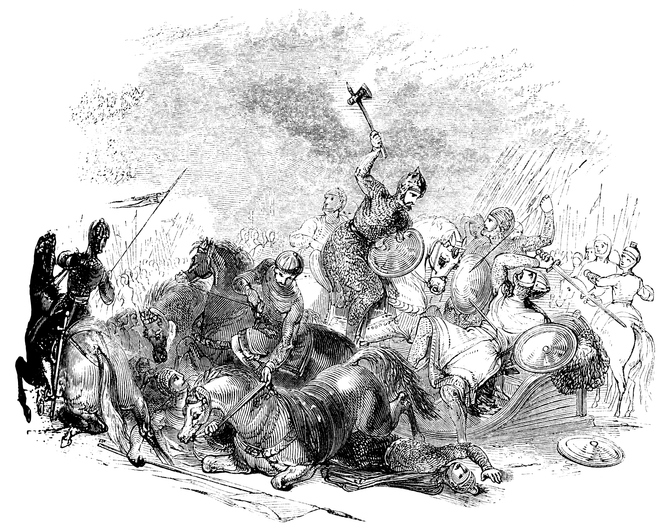
For centuries, the shield was the most defining piece of equipment for any warrior. When you picture a medieval knight riding into battle, you likely imagine them holding a broadsword in one hand and a brightly painted shield in the other. These large wooden or metal defenses were vital for survival on the chaotic battlefields of the Middle Ages. They absorbed the crushing blows of enemy weapons and protected knights from volleys of arrows raining down from above.
Beyond mere physical protection, these pieces of equipment held immense cultural weight. They acted as a canvas for a knight’s heraldry, displaying their family crest and colors to everyone on the field. A knight’s identity was deeply intertwined with the artwork they carried into combat. Recognizing a specific coat of arms could inspire allies or strike fear into the hearts of enemies.
Despite this deep practical and cultural significance, the shield eventually vanished from the knightly arsenal. This change did not happen overnight. Instead, knights gradually stopped using them because a series of revolutionary advances in armor, weapons, and battlefield tactics made them less necessary and sometimes completely impractical.
The Early Importance of Shields
Protection in Early Medieval Combat
During the early Middle Ages, body armor was relatively limited. A wealthy warrior might wear a chainmail shirt, known as a hauberk, which provided excellent defense against slicing attacks but offered little protection against crushing blows or concentrated piercing strikes. Because armor had these gaps in protection, a reliable defense was absolutely essential. A sturdy piece of wood and leather could deflect swords, spears, and arrows before they ever reached the knight’s body.
Types of Shields Used by Knights
As warfare evolved, so did the shapes and sizes of defensive gear. Early medieval knights often favored large round shields inherited from earlier Germanic and Viking traditions. By the 11th century, cavalrymen transitioned to the kite shield. Its elongated, teardrop shape was specifically designed to protect a rider’s left leg while mounted on horseback. Eventually, as armor began to improve, knights adopted the smaller, more manageable heater shield, which provided excellent upper-body coverage without weighing the rider down.
Shields as Symbols
A knight’s identity was paramount. In the heat of battle, closed helmets made it impossible to distinguish friend from foe by facial features alone. The flat surface of a shield provided the perfect space for heraldic designs. These colorful patterns and symbols announced a warrior’s lineage, social status, and allegiance, ensuring they were recognized by commanders and enemies alike.
Improvements in Plate Armor
Transition from Chainmail to Plate Armor
The most significant factor in the shield’s decline was the dramatic improvement in personal armor. By the 14th century, metallurgists developed techniques to create large, articulated plates of hardened steel. Knights slowly transitioned from wearing chainmail to donning partial plate, and eventually, full suits of plate armor. This comprehensive steel shell covered the warrior from head to toe, effectively turning the knight into a walking fortress.
Effectiveness of Plate Armor
A well-made suit of steel plate was incredibly effective. It easily deflected sword strikes, shattered wooden lances, and bounced incoming arrows. Because the armor itself could withstand the vast majority of battlefield threats, carrying a large piece of wood for defense became redundant. Knights realized they could survive direct hits without needing a separate barrier to block them.
Mobility and Weight Distribution
Contrary to popular belief, a customized suit of plate armor did not make a knight slow or clumsy. The weight of the steel was evenly distributed across the entire body, rather than hanging heavily from the shoulders like chainmail. This clever weight distribution allowed knights to move with surprising agility. More importantly, because their armor provided sufficient protection, knights could finally drop their shields and free up their left hand for offense.
Changes in Weapons and Combat Style
Rise of Two-Handed Weapons
Once knights no longer needed a free hand for defense, they began adopting larger, more devastating weapons. The battlefield saw a surge in the use of two-handed armaments like the longsword, the poleaxe, and the war hammer. These weapons required both hands to wield effectively, making it physically impossible to carry a standard shield at the same time.
Advantages of Two-Handed Fighting
Fighting with both hands offered massive advantages. A knight swinging a poleaxe with both arms generated significantly more kinetic energy than a warrior swinging a one-handed broadsword. This extra power was crucial for defeating enemy knights who were also clad in thick plate armor. The sheer blunt force of a war hammer could concuss an enemy or dent their breastplate, crushing the ribs beneath.
Decline of Shield-Based Techniques
As heavy, armor-piercing weapons became the standard, traditional defensive techniques fell out of favor. A wooden board could easily be splintered by a direct hit from a halberd or a heavy poleaxe. Instead of blocking with a separate piece of equipment, knights learned to parry attacks using the thick steel blades of their longswords, relying on their armor to absorb any glancing blows.
Influence of Battlefield Tactics
Cavalry Changes
The role of the knight on the battlefield also shifted. Heavy cavalry charges became highly specialized maneuvers. Knights relied on the sheer momentum of their armored warhorses and the extended reach of their lances to break enemy lines. During these charges, the armor provided the necessary defense, and managing a shield while steering a horse and aiming a heavy lance became an unnecessary complication.
Infantry and Formations
Armies began to organize differently as the Middle Ages progressed. Disciplined infantry formations, particularly those using long pikes, proved highly effective against cavalry charges. To counter these dense formations, knights often had to dismount and fight on foot alongside their own infantry. In these grinding melee engagements, the crushing power of two-handed polearms was far more valuable than the passive defense of a shield.
Gunpowder and Firearms
The late medieval period introduced a weapon that would permanently alter warfare: the firearm. Early gunpowder weapons, such as the arquebus, fired projectiles with enough velocity to punch straight through steel plate. If a lead ball could pierce a hardened steel breastplate, a wooden shield offered absolutely no protection. As firearms became more prominent, both traditional shields and heavy plate armor began to lose their battlefield utility.
Situations Where Shields Lived On
Tournaments and Ceremonial Use
While they vanished from active combat, shields did not disappear entirely from medieval culture. They remained a central component of tournaments and jousting matches. In these controlled sporting events, specialized shields called targes were bolted directly to the knight’s armor to provide a specific target for the opponent’s lance. They also retained their immense ceremonial value, continuing to serve as the primary canvas for family coats of arms.
Specialized Troops
It is also important to note that while heavily armored knights discarded them, other soldiers did not. Light infantry, archers, and unarmored militiamen continued to use various forms of shields for centuries. For example, crossbowmen utilized massive wooden pavises to hide behind while reloading their weapons.
Regional Differences
The transition away from these defensive tools also varied by geography. In regions where full plate armor was too expensive, too hot, or simply unavailable, shields remained a vital part of combat. Armies in Eastern Europe and the Middle East continued to employ lighter cavalry and infantry tactics, relying on agile combat styles where small, maneuverable bucklers or round shields were highly effective.
The Legacy of the Medieval Shield
The image of the shield-bearing knight is forever cemented in our historical imagination. However, the reality of medieval warfare was one of constant technological adaptation. The development of articulated steel plate armor rendered secondary defenses redundant, while the pressing need to penetrate that same armor drove the adoption of powerful two-handed weapons.
Combined with the evolution of organized pike formations and the devastating arrival of gunpowder, the shield simply outlived its practical usefulness for the heavy cavalryman. Its disappearance from the knight’s hands was not a sudden event, but a gradual reflection of a world where warfare was becoming faster, heavier, and far more destructive.