
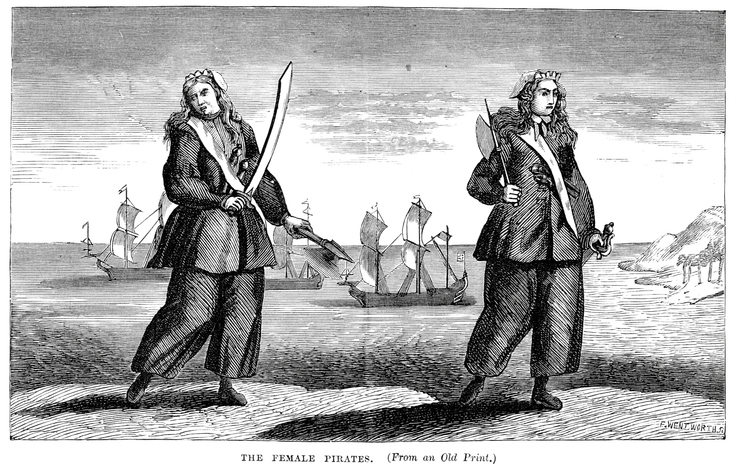
When we think of notorious pirates, names like Blackbeard and Captain Kidd usually come to mind. These men sailed the Caribbean with a handful of ships and a few hundred followers. However, they pale in comparison to a Chinese woman named Ching Shih. She commanded an armada so massive that it outnumbered the navies of entire nations.
Historical records frequently describe Ching Shih as one of the most successful pirates in history. At the height of her power, she controlled hundreds of ships and tens of thousands of outlaws. She dominated the South China Sea, challenged the Qing Dynasty, and fought off European naval powers.
This post explores the extraordinary life of Ching Shih. You will learn how she rose from poverty to become a brilliant military strategist. We will examine the strict laws she imposed on her fleet, the legendary battles she won, and the unprecedented amnesty deal she negotiated to secure her freedom.
A Murky Beginning on Floating Brothels
Ching Shih was born around 1775 in the Guangdong province of southeastern China. She grew up in a Tanka family, a marginalized ethnic group that lived and worked entirely on boats. Poverty defined her early years. To survive, she began working as a prostitute on the floating brothels of Canton.
Details about her early life remain poorly documented. Most of what historians know about her youth comes from later historical reconstruction rather than primary records. We know her original name was Shi Yang, but history remembers her primarily by her married title, Ching Shih, which translates simply to “Widow of Zheng.”
Despite her harsh circumstances, she developed a reputation for her sharp mind and business acumen. These traits would eventually help her escape the floating brothels and enter a completely different world of maritime power.
Marriage to the Red Flag Fleet Commander
In 1801, her life changed forever when she met Zheng Yi. He was the feared commander of the Red Flag Fleet and hailed from a long, respected lineage of pirates.
Many popular legends claim that Zheng Yi raided a brothel, captured her, and forced her into marriage. However, historical evidence suggests a much more nuanced reality. Other accounts indicate that this was a negotiated marriage. According to these stories, she refused to marry him unless he granted her an equal share of his power and wealth. The phrase “bought and married her” is an oversimplification of a complex partnership.
Regardless of exactly how they wed, Zheng Yi recognized her brilliant strategic mind. He agreed to her terms, and she stepped onto his ship not just as a bride, but as an active leader.
An Equal Partner in Piracy
Ching Shih did not sit idly by while her husband ruled. She shared command and played a major leadership role in organizing his criminal empire.
At the time, the South China Sea was filled with competing pirate factions. With her sharp negotiating skills, she helped her husband unify these rival groups into a powerful confederation. They organized the pirates into six distinct fleets, each flying a different colored flag: red, black, blue, white, yellow, and purple.
Together, the couple commanded the massive Red Flag Fleet. By 1804, their combined forces had grown to include hundreds of ships and an estimated 15,000 to 60,000 pirates. They essentially operated as a sovereign navy, forcing coastal villages and merchant vessels to pay them protection money.
Taking Full Command of the Armada
The formidable husband-and-wife partnership ended abruptly in 1807. Zheng Yi died under mysterious circumstances. Some reports say he perished in a typhoon, while others claim he fell overboard or died fighting in Vietnam.
His sudden death created a dangerous power vacuum. Ching Shih knew she had to act quickly to prevent the confederation from collapsing into bloody infighting. She immediately formed a political alliance with Cheung Po Tsai, her late husband’s adopted son and second-in-command. She also secured the loyalty of her husband’s powerful relatives.
With her authority cemented, she took full control of the Red Flag Fleet. Under her sole leadership, the armada expanded dramatically. At her peak, she commanded an estimated 1,800 ships and up to 80,000 pirates. This scale is exactly why historians widely support her title as the most successful pirate commander of all time.
The Iron Code of Conduct
Managing tens of thousands of criminals required absolute discipline. Ching Shih implemented a strict, ruthless code of conduct to keep her massive fleet in check.
She centralized all military and financial decisions. No pirate could attack a ship or village without her direct authorization. Anyone who launched an unsanctioned raid faced immediate beheading.
Financial fairness was strictly enforced. Whenever a ship captured loot, the crew had to present it for inspection. The capturing ship received 20 percent of the treasure, and the remaining 80 percent went into a collective public fund to support the entire fleet. Stealing from this fund resulted in severe whippings or death.
She also established strict rules regarding the treatment of female captives. Pirates were forbidden from harming or assaulting women. Rape was punishable by immediate beheading. If a pirate wished to marry a captive, he could do so, but he was required to remain faithful and treat her with respect. Any mistreatment of a wife resulted in execution.
Defeating Empires and Navies
Ching Shih’s immense power quickly became a massive problem for the Qing Dynasty. The Chinese government grew tired of her fleet taxing their coastal towns and sinking their ships.
In 1808, the Qing Navy sent a massive fleet of warships to destroy her. Instead of retreating, she sailed directly toward the government forces. The battle ended in a devastating defeat for the Chinese empire. She destroyed half of the Qing ships and captured several others to add to her own armada.
Desperate to stop her, the Qing government eventually asked foreign navies for help. The British and the Portuguese both attempted to hunt down the Red Flag Fleet. In 1809, the Portuguese blockaded her ships in Tung Chung Bay for several months. Despite taking heavy losses, she successfully navigated her fleet out of the trap and sailed away largely intact.
Negotiating a Peaceful Retirement
By 1810, Ching Shih realized that the constant warfare with global superpowers was unsustainable. The Qing government, equally exhausted by the costly naval battles, offered an amnesty program to any pirates willing to surrender.
She personally walked into the governor’s office in Canton to negotiate the terms of her surrender. She proved to be just as formidable at the negotiating table as she was on the battlefield.
She secured a total pardon for herself and nearly all of her tens of thousands of pirates. The government allowed them to keep all of their stolen wealth. She also successfully demanded that the government dissolve the legal mother-son relationship between her and Cheung Po Tsai so they could be legally married. Her new husband even received a comfortable military commission in the Qing Navy.
The Legacy of the Pirate Queen
Ching Shih retired as a wealthy, free woman. She moved back to Guangdong, opened a successful gambling house, and lived a quiet life with her family. She died peacefully in her bed in 1844 at the age of 69.
Her journey from a floating brothel to the absolute ruler of the South China Sea remains an unparalleled historical achievement. She built an empire, defeated global superpowers, and walked away with her life and her fortune intact.
To learn more about fascinating figures from maritime history, check out the resources at Military.com or dive into the archives of The Vintage News.
Verified References
“Most successful pirate” claim
- Multiple historical summaries describe Ching Shih as one of—often the most—successful pirates in history due to the scale of her fleet (tens of thousands of pirates and hundreds of ships).
- For comparison, typical Caribbean pirates commanded only a few ships and hundreds of men, while she commanded vastly more.
Conclusion: The “most successful pirate” claim is widely supported, though sometimes phrased as “one of the most successful.”
2. She was a prostitute in China
- Sources consistently state she worked as a prostitute (likely on floating brothels in Guangdong/Canton) before entering piracy.
Nuance:
- Details of her early life are poorly documented, so this is based on later historical reconstruction rather than strong primary records.
3. Marriage to the Red Flag Fleet commander
- She married the pirate leader Zheng Yi (Cheng I), commander of the Red Flag Fleet, around 1801.
Nuance (important):
- Some accounts say she was captured and then married, others say it was a negotiated marriage.
- The phrase “bought and married her” is an oversimplification—the exact circumstances are debated.
4. She was treated as an equal and became a commander
- Evidence shows she shared command and played a major leadership role in organizing the pirate confederation early on.
- She helped unify multiple pirate fleets into a powerful coalition.
Conclusion: The idea that she was not just a passive spouse but an active leader/equal partner is well supported.
5. She later took full command
- After her husband’s death (~1807), she took control of the Red Flag Fleet and expanded it dramatically.
Core academic source (most important)
Dian H. Murray — Pirates of the South China Coast, 1790–1810 (1987)
- This is the foundational modern scholarly study of Chinese piracy and the main academic source behind most modern accounts.
- Murray confirms:
- Ching Shih “participated fully in her husband’s piracy”
- She became a co-leader/partner rather than a passive spouse.
- Murray is also cited explaining naming conventions and limited records of her life
This book is the closest thing to a primary scholarly authority on her life.
https://www.atlasobscura.com/articles/ching-shih-chinese-female-pirate