
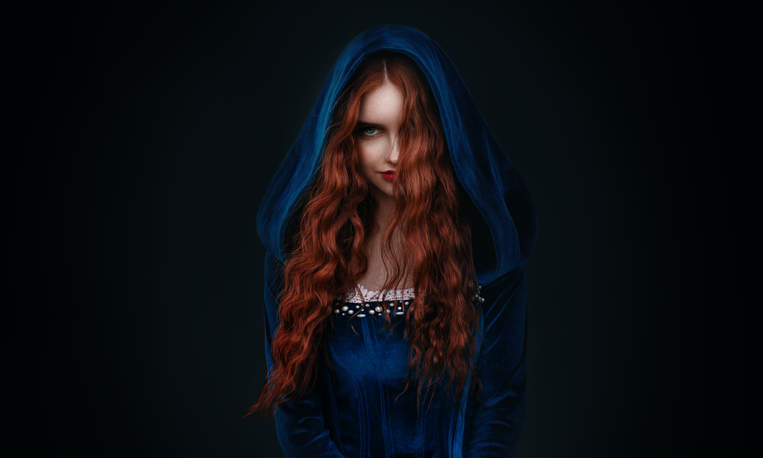
Living with red hair in the ancient Mediterranean world carried a unique and terrifying burden. While some mythological heroes were celebrated for their fiery locks, ordinary citizens with the same trait faced intense suspicion. A pervasive superstition warned that people born with red hair were destined to transform into bloodthirsty monsters after they died.
This fear was rooted in the deeply ingrained visual norms of the region. The vast majority of the population possessed dark hair, dark eyes, and olive-toned skin. When someone broke this mold, their physical differences were often interpreted as a sign of inner imbalance or supernatural corruption. Over time, these visual anomalies became hopelessly entangled with folklore surrounding the restless dead.
By examining the cultural, medical, and geographic beliefs of ancient Greece, we can uncover exactly how this bizarre myth took shape. You will learn about the terrifying creature known as the vrykolakas, the ancient medical theories that demonized red hair, and how physical traits like pale skin fueled centuries of vampire folklore.
The terrifying legend of the vrykolakas
When ancient Greeks feared that a person would return from the grave, they were not picturing a sophisticated, cape-wearing aristocrat. The creature that haunted their nightmares was called a vrykolakas. This undead being was a far cry from the modern, romanticized vampire that drinks blood from the necks of unsuspecting victims.
Instead, the vrykolakas behaved more like a mindless ghoul. Folklore described these creatures as bloated, ruddy-faced corpses that roamed the countryside under the cover of darkness. They were believed to spread disease and bring ruin to local villages. Most horrifying of all, they were said to devour human flesh, showing a particular preference for the livers of the living.
The fear of these creatures was incredibly powerful and persisted for centuries. As Greek mythology slowly merged with Slavic folklore, the vrykolakas eventually helped shape the blood-sucking vampires of later European legends. But in the ancient Mediterranean, the threat was raw, visceral, and intimately connected to physical abnormalities.
Why did red hair spark supernatural fears?
The ancient Greek worldview relied heavily on visual harmony and cosmic balance. When a person’s appearance fell outside the expected norm, their community often reacted with suspicion. Several key factors explain how this prejudice morphed into a fear of the undead.
A rare and foreign appearance
Red hair is genetically rare, appearing in only a tiny fraction of the global population. In the ancient Mediterranean, it was almost entirely absent among the native population. Most naturally red-haired individuals encountered by the Greeks came from northern territories, such as Thrace or Celtic lands.
The Greeks drew a sharp line between their civilized society and the foreign tribes they called “barbaroi.” Northern peoples were frequently stereotyped as wild, violent, and spiritually unstable. Because red hair was visually linked to these foreign lands, it became a symbol of danger and the unknown. People with fiery hair were treated as outsiders, making it incredibly easy for the community to project supernatural fears onto them.
Pale skin and the Mediterranean sun
The physical contrast between red-haired individuals and the general Greek population extended beyond hair color. People with red hair typically possess very pale skin that burns easily when exposed to intense ultraviolet rays. In the blinding brightness of the southern Mediterranean, this sensitivity was impossible to hide.
Ancient Greek culture closely associated the sun with vitality, divine order, and the god Helios. The average citizen tanned easily, absorbing the sun’s rays as a natural part of daily life. In contrast, those who blistered, burned, or actively avoided the sunlight appeared to physically reject this life-giving force. Aversion to daylight perfectly matched the behaviors of nocturnal monsters, cementing the idea that pale-skinned redheads were closer to creatures of the night than normal human beings.
Medical beliefs and fiery temperaments
The superstition was further strengthened by the medical theories of the time. Humoral medicine, which dominated ancient Greek thought, taught that a person’s physical traits reflected their internal balance of bodily fluids.
According to this medical framework, red hair indicated an excess of heat and blood. This internal imbalance was thought to cause a volatile, aggressive, and passionate temperament. If a person was excessively fiery and difficult to control in life, ancient people assumed that their restless energy would prevent them from finding peace in the grave. The excess life force supposedly trapped within their bodies made them prime candidates for reanimation.
Post-mortem precautions for the restless dead
Because the Greeks took burial rituals very seriously, the fear of the vrykolakas heavily influenced funeral practices. A proper burial was essential to ensure the soul transitioned safely into the afterlife. If the community suspected that a deceased person might rise again, they took drastic measures to keep the corpse in its place.
Archaeological evidence and historical texts reveal that unusual restraints were sometimes used in ancient burials. Heavy stones were placed over graves, bodies were pinned down, and some corpses were even burned to entirely destroy the physical vessel. Red-haired individuals, already burdened by lifelong suspicion, were highly likely to receive these extreme preventative treatments to stop their supposed vampiric resurrection.
The lasting legacy of Greek vampire folklore
The belief that redheads were destined to become flesh-eating monsters highlights the powerful human tendency to fear the unfamiliar. What we now know is simply a mutation in the MC1R gene was once viewed as a dangerous supernatural curse. Ancient Greek society combined foreign prejudice, medical misunderstanding, and a deep fear of the restless dead to create a terrifying myth that endured for generations.
Understanding the origins of the vrykolakas offers a fascinating glimpse into how folklore evolves. It also serves as a compelling reminder to question how we perceive and treat physical differences today. The next time you see a vampire depicted on screen, you can trace its lineage back to the sun-drenched shores of the Mediterranean, where a simple twist of genetics sparked one of history’s most enduring legends.
Verified References
General claim about redheads → vampires in Greek belief
- Ancient Greeks Feared Redheads Would Become Vampires
- States that Greeks believed redheads could become vrykolakas (undead beings) after death.
- Redheads have been Feared and Vilified Throughout History
- Notes that in Ancient Greece, redheads were “lumped in” with vampires in folklore traditions.
- In Ancient Greece, they believed redheads became vampires after death
- Provides a more detailed explanation of how physical difference (like red hair) became linked to fears of the undead.
Explanation: rarity, pale skin, and sunlight sensitivity
- Ancient Greece’s Myths on Redhead Vampires
- Explains that red hair was rare and associated with:
- pale skin
- burning easily in sunlight
- being linked to “creatures of the night”
- Explains that red hair was rare and associated with:
- Same idea reinforced in transcript form:
- Transcript: Redheads as Vampires in Ancient Greece
- Explicitly connects pale skin and sun sensitivity to suspicion and supernatural associations.
- Additional contextual explanation:
- Mediterranean Greeks typically had darker hair/olive skin, making redheads appear unusual and “foreign,” which contributed to superstition
Important accuracy note (for credibility)
If you’re citing this in something academic or serious, include a qualifier like:
- The idea is reported in later folklore and modern summaries, often tied to the Greek concept of the vrykolakas (a revenant-like undead).
- However, direct evidence from Classical Greek texts is sparse, and some historians argue the association may be exaggerated or influenced by later European vampire traditions.
For example, a discussion among historians notes there’s no clear ancient Greek category of “vampire” tied to hair color in surviving texts.