
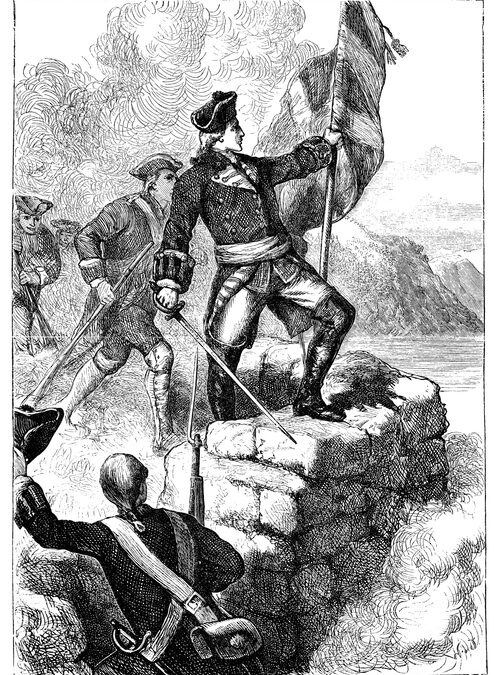
The American Revolutionary War hung in the balance in the spring of 1781. British forces were advancing through the southern colonies with devastating speed, destroying vital supply lines and scattering local militias. To counter this growing threat, General George Washington sent a young but highly capable French officer south. Gilbert du Motier, Marquis de Lafayette, led a force of roughly 1,200 Continental troops into a complex theater of war.
This maneuver would soon become known as the Virginia Campaign. By crossing the Potomac River into Alexandria in April 1781, Lafayette set off a chain of events that directly influenced the war’s outcome. Reading this breakdown will help you understand the strategic military movements, the intense personal rivalries, and the vital turning points that ultimately trapped the British army at Yorktown.
A Desperate Defense Against British Raids
Early in 1781, the state of Virginia faced a severe military crisis. Benedict Arnold had invaded the state in January, conducting damaging raids and throwing the region into chaos. Washington initially dispatched Lafayette in February to counter Arnold’s destructive campaign. The mission was dangerous from the start. The American forces were badly outnumbered and lacked adequate supplies to mount a traditional offensive.
Things quickly went from bad to worse for the Continental Army. On March 16, 1781, the French fleet suffered a critical defeat at the First Battle of the Capes (also known as the Battle of Cape Henry). According to the Encyclopaedia Britannica, this naval loss allowed the British to seize firm control of the local waters. Four days later, British reinforcements landed on the Virginia coast. This arrival significantly boosted the strength of the British presence and left Lafayette with no hope of immediate French naval support.
Changing Orders and a Bitter Rivalry
Facing a vastly superior enemy, Lafayette made a tactical withdrawal northward toward Maryland. He planned to rejoin Washington’s main army in New York. However, the military situation remained fluid. While stationed at Head of Elk, Maryland (present-day Elkton), he received a crucial letter from Washington. The commander ordered him to move his men south and unite with General Nathanael Greene’s army in North Carolina.
Before Lafayette could complete this movement, Washington sent another set of instructions. Documented in The Papers of George Washington, these new orders authorized Lafayette to remain in Virginia. General Greene also urged the young Frenchman to stay. Greene wanted Lafayette to contain the British forces and prevent them from reinforcing the southern British army.
By mid-April, Lafayette reached Baltimore and learned troubling news. General William Phillips had officially assumed command of the British forces from Benedict Arnold. This development was deeply personal for Lafayette. Phillips had previously commanded the British artillery at the Battle of Minden in 1759. During that specific battle, a cannonball fired by Phillips’s unit killed Lafayette’s father. This historical detail, highlighted by the Virginia Museum of History & Culture, added a layer of personal tragedy and motivation to the unfolding military campaign.
The Cat-and-Mouse Game Across Virginia
Lafayette pushed forward despite the emotional weight of his enemy’s identity. He crossed the Potomac and reached Richmond in late April 1781. Shortly after his arrival, Washington offered Lafayette the option to return to New York if he felt overwhelmed. Lafayette chose to stay. He took command of the regional forces, which included troops led by General von Steuben and General Thomas Nelson.
The command structure of the British army soon experienced a sudden shock. On May 13, General Phillips died of a fever. Benedict Arnold briefly resumed command of the British troops. This arrangement did not last long, as General Charles Cornwallis made a surprising strategic decision. He marched his army north into Virginia instead of pushing against General Greene in the Carolinas. As noted by the National Park Service, Cornwallis reached Petersburg on May 20, combined his troops with Arnold’s, and took overall command.
Lafayette was once again heavily outnumbered. For the next month, Cornwallis and his aggressive cavalry commander, Banastre Tarleton, conducted destructive raids across the Virginia countryside. Lafayette shadowed their movements closely. He sparred with the British detachments but carefully avoided a massive, decisive battle that could destroy his small army.
The Tide Turns With Vital Reinforcements
Patience and tactical evasion eventually paid off. On June 10, 1781, the strategic balance shifted significantly. General Anthony Wayne arrived with a command of roughly 800 Continental soldiers. This vital reinforcement roughly equalized the size of the two contending armies. Lafayette wasted no time. He immediately transitioned from a defensive posture to an offensive push eastward. Cornwallis recognized the shift in momentum and began to fall back.
The changing dynamics left a lasting impression on the soldiers who fought there. Virginia militiaman John Carpenter later recounted these events in his military pension application. Carpenter specifically remembered General Wayne meeting the Virginia troops at Raccoon Ford. The Virginians had been retreating steadily for weeks. Once Wayne’s Pennsylvania troops arrived, the combined American forces became the pursuers. They drove the British back to Richmond, then to Williamsburg, and eventually toward the coast. Historical pension records archived by the American Battlefield Trust confirm the immense morale boost this reinforcement provided to the weary American soldiers.
Trapping Cornwallis on the Peninsula
The relentless American pursuit forced the British army into a vulnerable geographic position. Over the following weeks, Cornwallis pulled his forces all the way back to the Virginia coast. Lafayette stayed close behind, maintaining pressure without overextending his supply lines.
Acting on direct orders from his superior, General Henry Clinton, Cornwallis began fortifying the port town of Yorktown on August 1. He expected the Royal Navy to extract his troops or provide massive reinforcements. Instead, a French fleet arrived to blockade the coast, while Washington and General Rochambeau marched a massive allied army down from New York. Lafayette’s brilliant containment strategy kept Cornwallis pinned in place until this larger trap could snap shut. When Cornwallis finally left Yorktown in October 1781, it was as a paroled prisoner of war.
Frequently Asked Questions About the 1781 Virginia Campaign
Why did George Washington send Lafayette to Virginia?
Washington initially sent Lafayette south to stop Benedict Arnold from destroying valuable American supply depots. The mission evolved as British troop levels increased, turning into a broader effort to prevent the British from controlling the southern colonies.
Who commanded the British forces during the Virginia Campaign?
Command shifted several times in 1781. Benedict Arnold led the initial raids, followed by General William Phillips. After Phillips died of a fever, Arnold took charge briefly until General Charles Cornwallis arrived from North Carolina to assume total control.
How did Lafayette’s strategy lead to the Siege of Yorktown?
Lafayette used a strategy of tactical evasion. He avoided direct battles when outnumbered, keeping his army intact. Once reinforcements arrived, he applied steady pressure to force Cornwallis toward the coast. This containment allowed Washington and the French naval forces to trap the British at Yorktown.
The Legacy of a Masterful Strategic Retreat
General Lafayette’s actions in the spring and summer of 1781 serve as a masterclass in military patience. By refusing to engage a superior force prematurely, he preserved the Continental Army’s presence in the south. His strategic withdrawal and subsequent aggressive pursuit completely disrupted British war plans.
Studying this campaign reveals how flexibility and determination can overcome overwhelming odds. You can apply these lessons of adaptability to historical studies and modern strategic planning alike. For a deeper understanding of this decisive era, consider exploring additional resources provided by the Mount Vernon Ladies’ Association to learn more about the final march to Yorktown.
Verified References
Lafayette sent to Virginia (~1,200 troops) in response to Arnold
- The National Park Service confirms that Marquis de Lafayette was dispatched by George Washington with about 1,200 troops to counter Benedict Arnold:
“Washington… sent Lafayette south with 1,200 troops… to capture… Benedict Arnold.”
Read source:
March 16, 1781 naval defeat (First Battle of the Capes) & British reinforcements
- The same NPS source confirms:
- A naval clash on March 16 (the First Battle of the Capes)
- British naval control afterward
- Reinforcements under William Phillips
Lafayette’s movement north, then redirected south (April 1781 letters)
- Primary-source documentation from the Founders Online (U.S. National Archives) confirms Lafayette’s movements and correspondence:
- April 10 letter references British activity in the Potomac and Lafayette’s positioning:
Lafayette to Washington, 10 April 1781 - April correspondence shows his intended movement via Alexandria and Virginia:
Lafayette to Jefferson, 17 April 1781
These letters support:
- His movement through Maryland (Head of Elk / Elkton)
- His march toward Virginia under Washington’s orders
Crossing the Potomac into Alexandria (April 1781)
- A historical campaign summary confirms:
“21 April 1781 — Lafayette crossed the Potomac into Virginia, and arrived at Alexandria.”
- Additional NPS material confirms British efforts to prevent his crossing:
British forces aimed “to prevent… Lafayette’s American army… from crossing the Potomac into Virginia.”
🔗 Sources:
- LostHistory: Lafayette’s Virginia Campaign timeline
- NPS: Jones Point standoff (Potomac crossing context)
Arrival in Richmond & command situation
- Primary letter confirms Lafayette’s arrival in Richmond and coordination with southern forces:
Lafayette reports his arrival “at Richmond… to assist… General Nathanael Greene’s leadership.”
- NPS confirms:
- Presence of Friedrich von Steuben
- Coordination with Virginia forces
- Lafayette’s defensive strategy
Death of General William Phillips (May 13, 1781)
- NPS confirms:
“On May 13, Phillips died… and Arnold was temporarily in command.”
Cornwallis marches to Virginia and assumes command
- NPS confirms:
- Charles Cornwallis moved north into Virginia
- Took command of British forces there
“Cornwallis… arrived… bringing his army… in command of over 7,000 troops.”
Lafayette outnumbered; avoids battle
- Direct quote from Lafayette:
“I am not Strong enough even to get Beaten.”
This supports:
- His avoidance strategy
- His inferior numbers vs. British forces
Reinforcement by Anthony Wayne (~800 troops)
- NPS confirms:
Lafayette was “reinforced with… Brigadier General ‘Mad’ Anthony Wayne… 800 men.”
- Entity: Anthony Wayne
British raids, Lafayette shadowing, movement toward Yorktown
- NPS describes:
- Ongoing British raids across Virginia
- Lafayette shadowing Cornwallis
- Gradual British withdrawal toward the coast
“Lafayette… shadow[ed] Cornwallis’ movements… Cornwallis… turned towards the Virginia coast.”
Yorktown fortification (August 1781)
- NPS confirms Cornwallis ultimately moved to the coast and fortified positions that led to Yorktown:
Cornwallis moved toward coastal bases with orders “to establish a naval base.”
(This culminates in the Yorktown campaign and surrender.)