
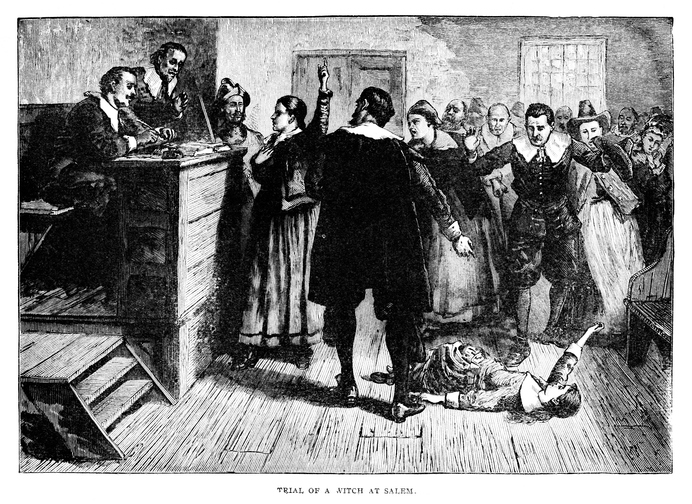
The events of 1692 in Salem Village remain one of the most misunderstood chapters in early American history. Popular movies and Halloween tales often feature terrifying scenes of fiery stakes and massive crowds cheering as accused townspeople face the flames. The reality of the Salem witch trials is deeply unsettling, but it looks remarkably different from the stories shown on the silver screen.
Many people hold strong beliefs about what happened to the accused colonists. Rumors suggest that thousands faced the accusations or that witch-hunters burned women alive in the town square. These dramatic narratives make for great fiction. Historical records, however, tell a much more specific and somber story about the Puritan settlement.
By examining court documents and credible historical research, we can separate fact from folklore. This post explores the exact methods of punishment used in Massachusetts Bay, the true scale of the accusations, and the actual number of victims. Read on to uncover the verified facts behind the Salem witch trials and learn what really happened during those fateful months.
The Burning Myth: Did Salem Burn Its Witches?
One of the most persistent legends surrounding the Salem trials is that the townspeople burned accused witches alive. It is a striking image that appears constantly in pop culture. Historical evidence directly contradicts this idea. Zero people were burned alive in Salem.
According to a History.com article on the Salem executions, “Contrary to popular belief, none of the condemned was burned at the stake.” The local magistrates followed English law, which did not permit burning as a punishment for witchcraft.
A detailed fact-check by Snopes confirms this reality. The claim that witches were burned in Salem is entirely false. Where did this misconception originate? The myth of execution by fire stems from European witch trials. During the peak of the witch-hunt hysteria across Europe, execution by fire was a disturbingly common practice. Church leaders and local governments in countries like Germany, France, and Scotland oversaw the burning of tens of thousands of accused individuals. Over time, that terrifying European history blended with the American narrative, creating a long-lasting myth about colonial New England.
The True Methods of Execution
If the accused colonists did not perish in the flames, what actually happened to them? The primary method of execution during the Salem witch trials was hanging. The grim reality of Gallows Hill is far less theatrical than a fiery stake, yet it remains a tragic historical truth.
Encyclopaedia Britannica states that 19 people were hanged over the course of the hysteria. These individuals were formally convicted by the Court of Oyer and Terminer and led to the gallows.
Only one individual suffered a different, far more gruesome fate. The court accused an elderly man named Giles Corey of witchcraft. When Corey refused to enter an innocent or guilty plea, the magistrates ordered a brutal punishment designed to force a statement. He was pressed to death with heavy stones over the course of two days. Corey famously refused to give the court what they wanted, demanding only “more weight” until he succumbed to the crushing pressure.
Beyond the 20 official executions, the poor conditions of the colonial jails claimed several other lives. The dungeons were cramped, freezing, and unsanitary. According to historical reviews, at least five other accused people died in jail while awaiting trial.
Exaggerated Numbers and Overflowing Jails
The intense paranoia that swept through Massachusetts Bay led to a massive wave of arrests. Neighbors turned against neighbors, and young girls pointed fingers at prominent community members. Because the panic spread so rapidly, rumors about the total number of victims often inflate the numbers to massive proportions.
How Many People Were Actually Accused?
Some informal stories claim that up to 2,000 individuals faced accusations of witchcraft in Salem. Historians heavily dispute this figure. While broader regional counts across decades of New England history might reach higher numbers, the specific events in Salem during 1692 involved a much smaller group.
Credible sources consistently estimate that around 200 people were formally accused. The panic extended outward from Salem Village to neighboring communities like Andover and Boston, drawing dozens of suspects into the legal web. Even with the hysteria crossing town borders, the court records do not support the idea of thousands of arrests.
The Harsh Reality of Imprisonment
Because the court only executed 20 individuals, the vast majority of the 200 accused faced a different ordeal. Most of the suspected witches were simply jailed. They endured horrific conditions for months on end.
The jails overflowed with men, women, and even children. The prisoners waited in limbo as the legal system struggled to process the overwhelming number of cases. When Governor William Phips eventually halted the proceedings and dissolved the court, he pardoned the remaining prisoners. Those who survived the freezing dungeons finally returned home, though their reputations and livelihoods were often destroyed.
Learning from Salem’s Tragic Past
The Salem witch trials serve as a powerful reminder of the dangers of unchecked paranoia and a flawed justice system. The facts are sobering enough without the need for fictionalized burnings or exaggerated numbers. A total of 19 innocent people were hanged, one man was pressed to death, and several others died in squalid cells. Around 200 lives were permanently altered by the accusations.
If you want to expand your knowledge of this pivotal historical event, consider visiting the actual historical sites in Massachusetts or exploring the preserved court transcripts online. Organizations like the Salem Witch Museum and local historical societies offer extensive, fact-based resources. Reading the original trial documents provides a raw, unfiltered look at the fear that gripped the colony and ensures we never forget the real victims of 1692.
Verified References
No one in Salem was burned at the stake
- According to History.com article on Salem executions: “Contrary to popular belief, none of the condemned was burned at the stake.”
- A detailed fact-check by Snopes (burning myth) confirms:
- The claim that witches were burned in Salem is false
- Burnings were common in European witch trials, not in colonial New England
This directly supports the core claim: zero people were burned alive in Salem.
Executions were by hanging (and one pressing), not burning
- Encyclopaedia Britannica (Salem witch trials) states:
- 19 people were hanged
- 1 man (Giles Corey) was pressed to death
- Others died in jail
- This is corroborated again by Britannica’s overview:
- 19 hanged, 5 died in custody, 1 pressed
So your line “some were hanged” is correct—but it was actually the primary method of execution.
Most accused people were jailed, not executed
- Historical summaries note that many more people were accused and imprisoned than executed.
- For example, Snopes reports over 200 people were accused, with many jailed during the trials
This supports your point that the majority were jailed rather than killed.
The “2,000 accused” number is exaggerated
Here’s where your statement needs correction:
- Credible sources consistently estimate:
- ~200 people accused, not 2,000
- Some broader regional or long-term counts (across New England or decades) can be higher, but Salem itself did not involve anywhere near 2,000 accused individuals.
So:
- “None were burned alive” — correct
- “2,000 accused” — not supported by historians