
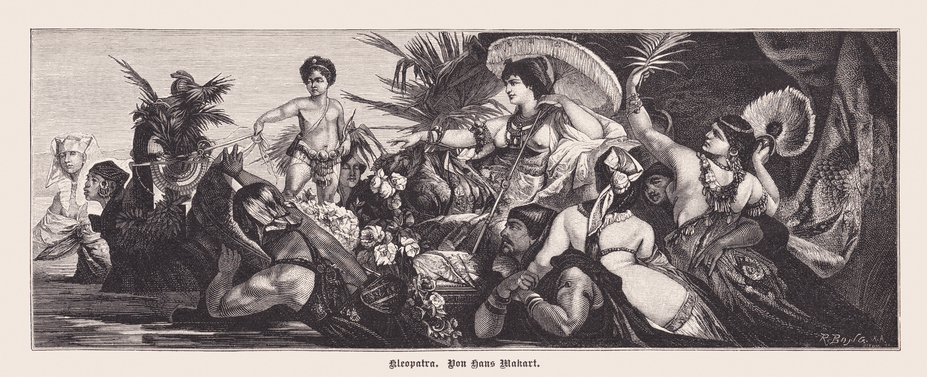
When you hear the name Cleopatra, you likely think of the ancient Egyptian empire. She is remembered as the iconic Queen of the Nile, the last ruling pharaoh, and a powerful leader who protected her kingdom from the expanding Roman Republic. Because of her deep association with Egypt, most people naturally assume she was natively Egyptian by blood.
The historical reality paints a very different picture. As far as historians and archaeologists can tell, Egypt’s famous ruler was actually Greek. She belonged to a long line of Macedonian royalty that took control of Egypt centuries before her birth.
Uncovering the truth behind her heritage requires looking closely at the family tree that ruled Egypt for nearly three hundred years. In this post, you will learn exactly where Cleopatra’s ancestors came from, why her ethnic background remains a topic of modern debate, and how she successfully blended her Greek bloodline with the culture of the Egyptian people she governed.
The Macedonian Roots of the Ptolemaic Dynasty
To understand Cleopatra’s origins, we have to look back to the time of Alexander the Great. Following Alexander’s sweeping conquests across the known world, his vast empire was divided among his top military commanders after his death in 323 BC.
Tracing the Lineage to Alexander the Great
One of Alexander’s most trusted Macedonian generals was Ptolemy I Soter. He took control of Egypt and established the Ptolemaic dynasty, a royal house that would rule the region for nearly three centuries.
Because Ptolemy I Soter was a Macedonian Greek, the entire ruling class that followed him was Macedonian Greek in origin. The name Cleopatra itself has strong Macedonian origins, originally meaning “glory of her father” in Ancient Greek. Cleopatra VII, the famous queen we know today, was a direct descendant of this founding general.
Why Historians Consider Cleopatra Ethnically Greek
The scholarly consensus remains clear on this topic. Historians generally agree that Cleopatra was predominantly of Macedonian Greek ancestry. Her family traced its roots back to northern Greece, and throughout their time in power, the Ptolemies worked hard to maintain their original identity.
A Legacy of Strict Royal Marriages
The Ptolemaic rulers governed from the city of Alexandria, a multicultural hub that was fundamentally Greek in its culture and administration. The ruling class actively preserved their European lineage. The Ptolemies rarely intermarried with native Egyptians.
Instead, the royal family typically married within their own dynasty or sought alliances with other Greek elites from neighboring territories like the Seleucid Empire. This practice of intermarriage and incestuous unions was designed to consolidate power and keep the royal bloodline exclusive. Because her ancestors strictly married other Greeks, historians conclude that Cleopatra likely had little to no native Egyptian ancestry on her father’s side.
The Mystery Surrounding Her Mother’s Identity
While the paternal line of Cleopatra is well-documented, the historical record is not entirely complete. This leaves a small margin of doubt regarding her absolute genetic makeup.
Is There Proof of Egyptian Ancestry?
Cleopatra’s exact ancestry isn’t 100% certain because the identity of her mother—and her grandmother—remains unclear. Most scholars believe her mother was Cleopatra V Tryphaena, who was also a member of the Ptolemaic family. However, because ancient texts do not definitively confirm her mother’s identity, some historians allow the possibility of limited non-Greek ancestry.
There has been wide speculation regarding the debate over Cleopatra’s ethnicity. Some theories suggest that a concubine or an unknown woman from a priestly Egyptian family could have been her mother. Despite these theories, there is no strong, conclusive evidence of significant Egyptian heritage. Based on the available data, the idea that she was entirely Greek is highly likely, even if it cannot be absolutely proven without DNA evidence.
A Greek Queen with an Egyptian Heart
You might wonder how a Greek woman became the ultimate symbol of ancient Egypt. The answer lies in her brilliant political strategy and her genuine respect for the people she ruled.
Embracing the Culture and Language of Her People
Previous Ptolemaic kings and queens ruled Egypt strictly as Hellenistic monarchs. They spoke Koine Greek, conducted all official court business in Greek, and refused to learn the native tongue of their subjects. Cleopatra took a radically different approach.
She fully embraced Egyptian culture and religion. She participated in traditional religious ceremonies, worshipped Egyptian deities, and presented herself as the reincarnation of the goddess Isis. Most remarkably, she was the only Ptolemaic ruler known to have learned the Egyptian language.
By speaking directly to her subjects in their native tongue and ruling as a traditional pharaoh, she earned the loyalty of the Egyptian people. Culturally and politically, she was entirely Egyptian. Ethnically, she was almost certainly Greek.
Frequently Asked Questions About Cleopatra’s Heritage
Was Cleopatra black or white?
Ancient conceptions of race were vastly different from how we categorize ethnicity today. The ancient Greeks and Egyptians did not use terms like “black” or “white.” Based on her Macedonian Greek ancestry, historians generally believe she had an olive-toned Mediterranean complexion. Prominent Egyptologists have noted that she was likely light-skinned, while other scholars emphasize that without physical remains, her exact appearance remains a historical mystery.
Did Cleopatra consider herself Egyptian?
Politically and culturally, yes. She presented herself as the rightful pharaoh of Egypt and deeply respected local traditions. However, she was also highly educated in Greek philosophy, literature, and arts, and she clearly valued her Macedonian royal heritage. She successfully navigated both identities to maintain control over her kingdom.
Why is there so much confusion about her origins?
Much of what we know about Cleopatra comes from Roman historians who wrote about her after her death. These accounts were often biased or designed to serve Roman political propaganda. Furthermore, the missing records regarding her mother’s exact identity leave just enough room for alternative theories to flourish in modern popular culture.
Rethinking the Legacy of Egypt’s Last Pharaoh
Cleopatra remains one of the most fascinating figures in human history. Her ability to navigate the treacherous political waters of the ancient Mediterranean world proves her exceptional intelligence and leadership.
While her bloodline traces back to the mountains of Macedonia rather than the banks of the Nile, her dedication to Egypt was absolute. She bridged the gap between two great ancient civilizations, securing her place as the ultimate Egyptian queen in the minds of future generations.
If you found this exploration of ancient history fascinating, continue your research by reading more about the powerful women who shaped the ancient world. History is full of hidden truths waiting to be uncovered.
Verified References
Cleopatra was part of a Greek (Macedonian) dynasty
- Cleopatra VII belonged to the Ptolemaic dynasty, founded by Ptolemy I Soter, one of Alexander the Great’s generals.
- This dynasty ruled Egypt after Alexander’s conquest and was Macedonian Greek in origin.
This directly supports the claim that she descended from a Macedonian general.
Historians generally consider her ethnically Greek
- Scholarly consensus: Cleopatra was “predominantly of Macedonian Greek ancestry.”
- Her family traced its roots to northern Greece, and the ruling class maintained Greek identity and culture.
So the idea that she was “actually Greek” is broadly correct in terms of ancestry.
The Ptolemies rarely intermarried with native Egyptians
- The ruling family typically married within their own dynasty or other Greek elites, preserving their lineage.
This strengthens the argument that Cleopatra likely had little to no native Egyptian ancestry on her father’s side.
But: her exact ancestry isn’t 100% certain
- The identity of her mother and grandmother is unclear, leaving some uncertainty.
- Some historians allow the possibility of limited non-Greek ancestry, though there’s no strong evidence of significant Egyptian heritage.
So “entirely Greek” is very likely but not absolutely provable.
She was still culturally and politically Egyptian
- Cleopatra ruled as a pharaoh of Egypt, embraced Egyptian religion, and even learned the Egyptian language (rare for her dynasty).
So calling her “not Egyptian” depends on what you mean:
- Ethnically: mostly Greek
- Nationality/ruler: Egyptian